



























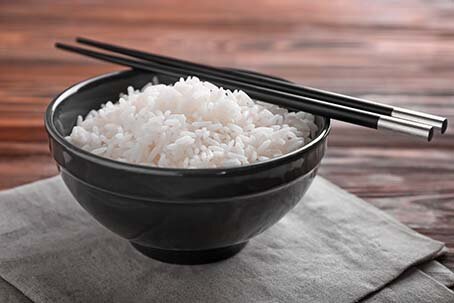
Thai jasmine rice, also known as fragrant rice, is considered the best type of Thai rice.
It is sown by hand and watered with rainwater. Thai fragrant rice is rated very highly all over the world, due to its unique properties and especially do to its clean and thin grains. When cooked, it keeps its shape while having a very soft and lightly sticky consistency, as well as the aroma of pandanus leaves. It is sometimes even eaten by itself, without any main dishes or sides.
Rice from the jasmine flowers has its origins in the Bang Khla region, of the Chachoengsao province, east of Bangkok. After its popularity becoming widespread, it received the official brand name of “Thai hom mali” which includes the Thai words “hom” for fragrant and “mali” after the jasmine flower.
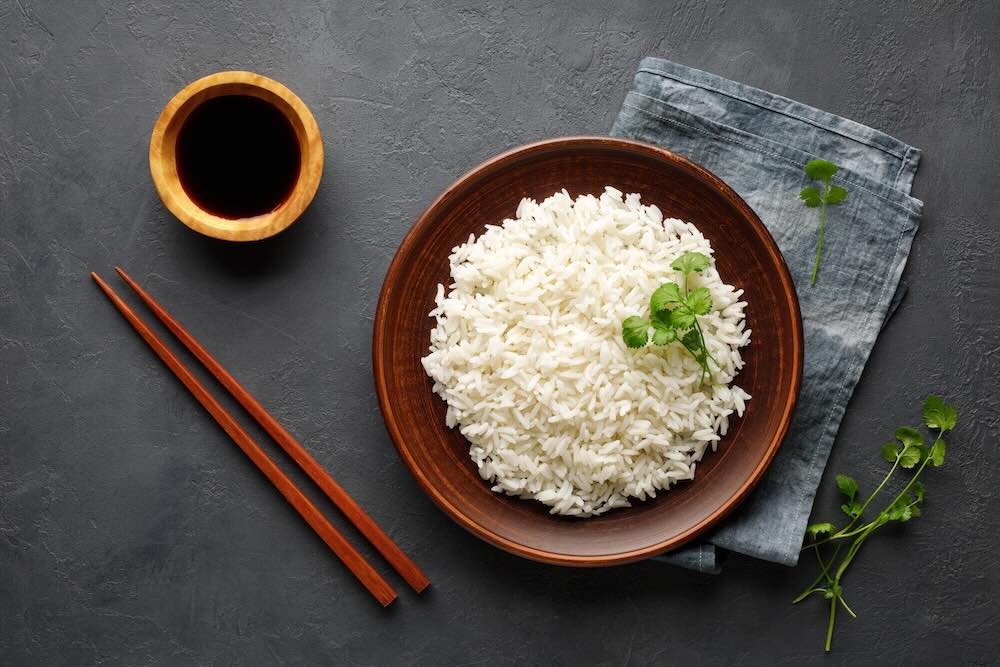
How to Cook Jasmine Rice
Fluffy, fragrant and soft jasmine rice is a staple of Thai, Vietnamese and many other Asian cuisines. All you need is the right rice-to-water ratio, a gentle rinse and a short resting time under the lid.
Why is jasmine rice so popular?
Jasmine rice is a long-grain aromatic rice known for its delicate fragrance, soft texture and naturally light stickiness. In Asian cooking, it is used as an everyday side dish for sauces, curries, grilled meat, stir-fries and soups.
Its aroma is often compared more to pandan leaves than to jasmine flowers. When cooked properly, the rice stays fluffy, keeps its shape and does not turn into a heavy mush.
Aroma
The gentle natural fragrance makes jasmine rice an ideal side dish even without strong seasoning.
Texture
Properly cooked rice is soft, fluffy and the grains separate easily from one another.
Use
It works beautifully with curries, sauces, grilled meat, tofu, kimchi rice and many Asian dishes.
The right water-to-rice ratio
Use about 1.2 to 1.4 parts water for 1 part jasmine rice. If you prefer firmer grains, start with a 1 : 1.2 ratio. For softer rice, use closer to 1 : 1.4.
1 cup rice
A good base amount for 2 to 3 servings as a side dish.
1.2 to 1.4 cups water
Less water gives firmer grains, while more water creates a softer texture.
5 to 10 minutes resting
After cooking, keep the rice covered. Steam finishes the texture of the grains.
Ingredients
You do not need salt or oil. Good jasmine rice should shine through its natural flavour and fragrance.
For 2 to 3 servings
- 1 cup jasmine rice
- 1.2 to 1.4 cups water
- cold water for a gentle rinse
- a pot with a tight-fitting lid or a rice cooker
How to cook jasmine rice properly
Jasmine rice is usually fairly clean, so it does not need to be washed as intensively as sushi rice. The important part is to cook it covered and let it rest after cooking.
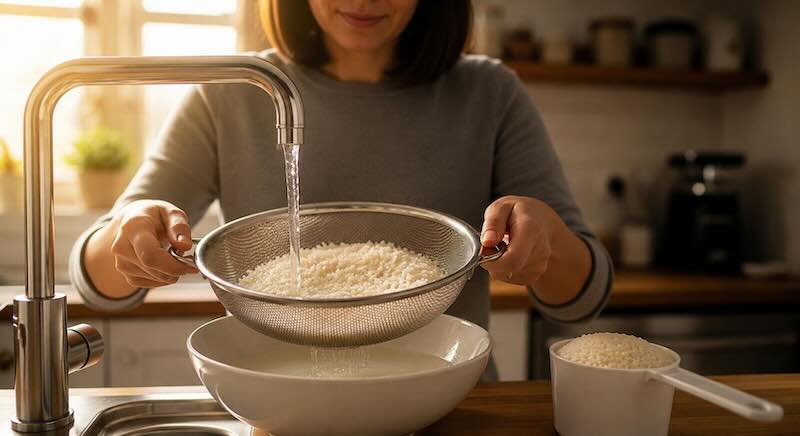
Step 1
Place the rice in a sieve or bowl and rinse it gently with cold water. The goal is to remove some of the surface starch, not to wash away all of the aroma.
Step 2
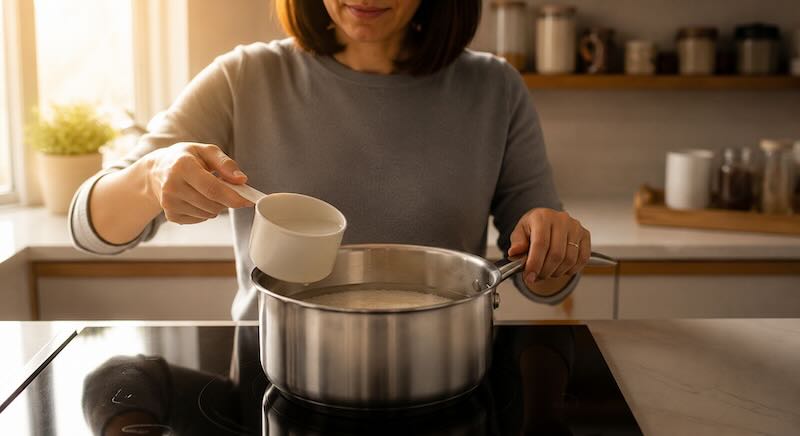
Add 1 cup of rice and 1.2 to 1.4 cups of water to a pot. The rice will not become mushy if you avoid adding too much water.
Step 3
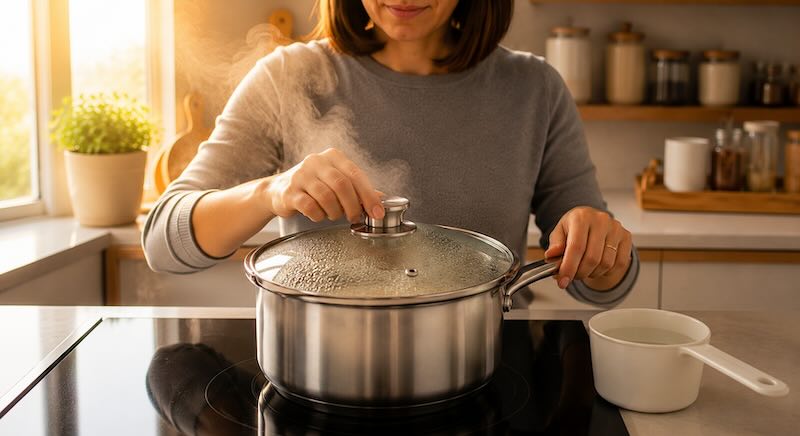
Bring the water to a boil, then reduce the heat to the lowest setting, cover with a lid and cook for about 12 to 15 minutes. Do not stir the rice while it cooks.
Step 4
Turn off the heat and let the rice rest covered for another 5 to 10 minutes. Then fluff it gently with a fork or rice paddle.

Common mistakes when cooking jasmine rice
If the rice is too soft, watery or sticky, the issue is usually too much water, stirring during cooking or skipping the resting time after cooking.
| Mistake | What happens? | How to fix it |
|---|---|---|
| Too much water | The rice becomes soft, wet and clumps into a mushy texture. | Start with a 1 : 1.2 ratio and add slightly more water only if needed. |
| Stirring while cooking | The grains break and release more starch. | Once the pot is covered, let the rice cook without stirring. |
| Cooking without a lid | Steam escapes and the rice cooks unevenly. | Use a lid that fits the pot well. |
| No resting time | The rice feels uneven and less fluffy. | Let it rest covered for 5 to 10 minutes. |
What to serve with jasmine rice?
Jasmine rice is a versatile side dish, especially for saucy dishes, curries, grilled meat, tofu or fried rice. It absorbs flavour beautifully and balances spicy dishes.
Frequently Asked Questions
Should jasmine rice be rinsed?
Yes, but only gently. The goal is to remove some surface starch, not to wash it as thoroughly as sushi rice.
What is the best water ratio for jasmine rice?
A ratio of 1 part rice to 1.2 to 1.4 parts water usually works best. Use less water for firmer rice and a little more for softer rice.
Why is my rice sticky after cooking?
The most common causes are too much water, stirring during cooking or not letting the rice rest after cooking.
Can I cook jasmine rice in a rice cooker?
Yes. Use the same water-ratio principle and let the rice rest briefly in the closed rice cooker after cooking.
Does jasmine rice go well with curry?
Yes. It is excellent with Thai, Vietnamese and Indian curries because it absorbs sauce well and balances spiciness.
Can I make fried rice from cooked jasmine rice?
Yes. Rice cooked the day before, chilled and then quickly fried in a wok works best.
Jasmine rice and ingredients at Foodland
Choose quality jasmine rice and ingredients that naturally go well with it – from curry pastes and coconut milk to soy, fish and teriyaki sauces.

















Add new comment:
Add reply to comment: