




























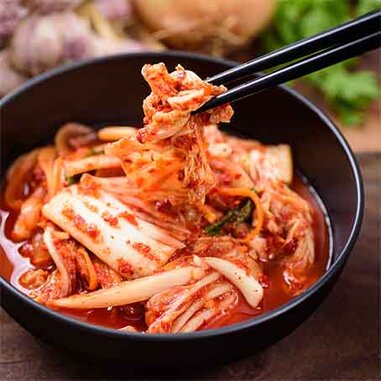
Traditional Kimchi Recipe will guide you through the preparation of classic Korean Tongbaechu-kimchi step by step. You will learn how to properly salt napa cabbage, prepare kimchi paste, coat individual leaves, and let the kimchi ferment to give it its typical spicy, sour, and deep flavor.
Traditional Kimchi Recipe
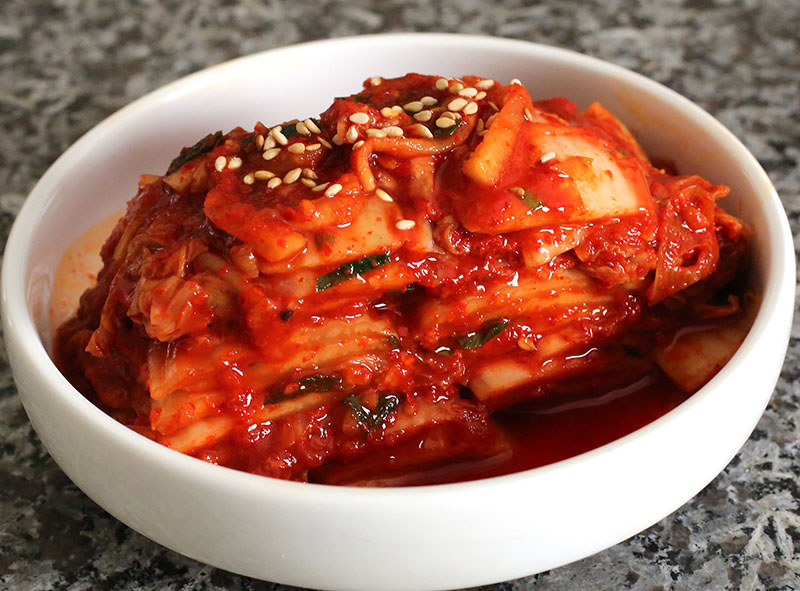
Tongbaechu-kimchi , also known as Baechu-kimchi or Pogi-kimchi, is the most classic type of Korean kimchi made from napa cabbage. This is the version that most people imagine when they hear the word kimchi.
Homemade kimchi seems complicated, but the process is straightforward: salt the cabbage, prepare the rice porridge, mix the spicy paste, coat the leaves, and let the kimchi ferment.

Recipe content
Choose the section you need right now. The tabs act as quick navigation within the recipe.

Ingredients for approximately 3.6 kg of kimchi
Traditional kimchi has several parts: salted cabbage, rice porridge, vegetables, and a distinctive red paste. If you are making kimchi for the first time, you can halve the amount.
🥬 For salting cabbage
- 2.7 kg napa cabbage
- 72 g kosher salt or coarse non-iodized salt
🍚 For rice porridge
- 480 ml of water
- 2 tablespoons sweet rice flour
- 2 tablespoons sugar
🥕 Vegetables
- 2 cups radishes, sliced into thin strips
- 1 cup carrots, cut into thin strips
- 7 to 8 pieces of spring onions
- 1 cup Asian chives, optional
- 1 cup minari, optional
🌶 Spices and seasonings
- 24 cloves of garlic
- 2 teaspoons ginger
- 1 medium onion
- 120 ml fish sauce
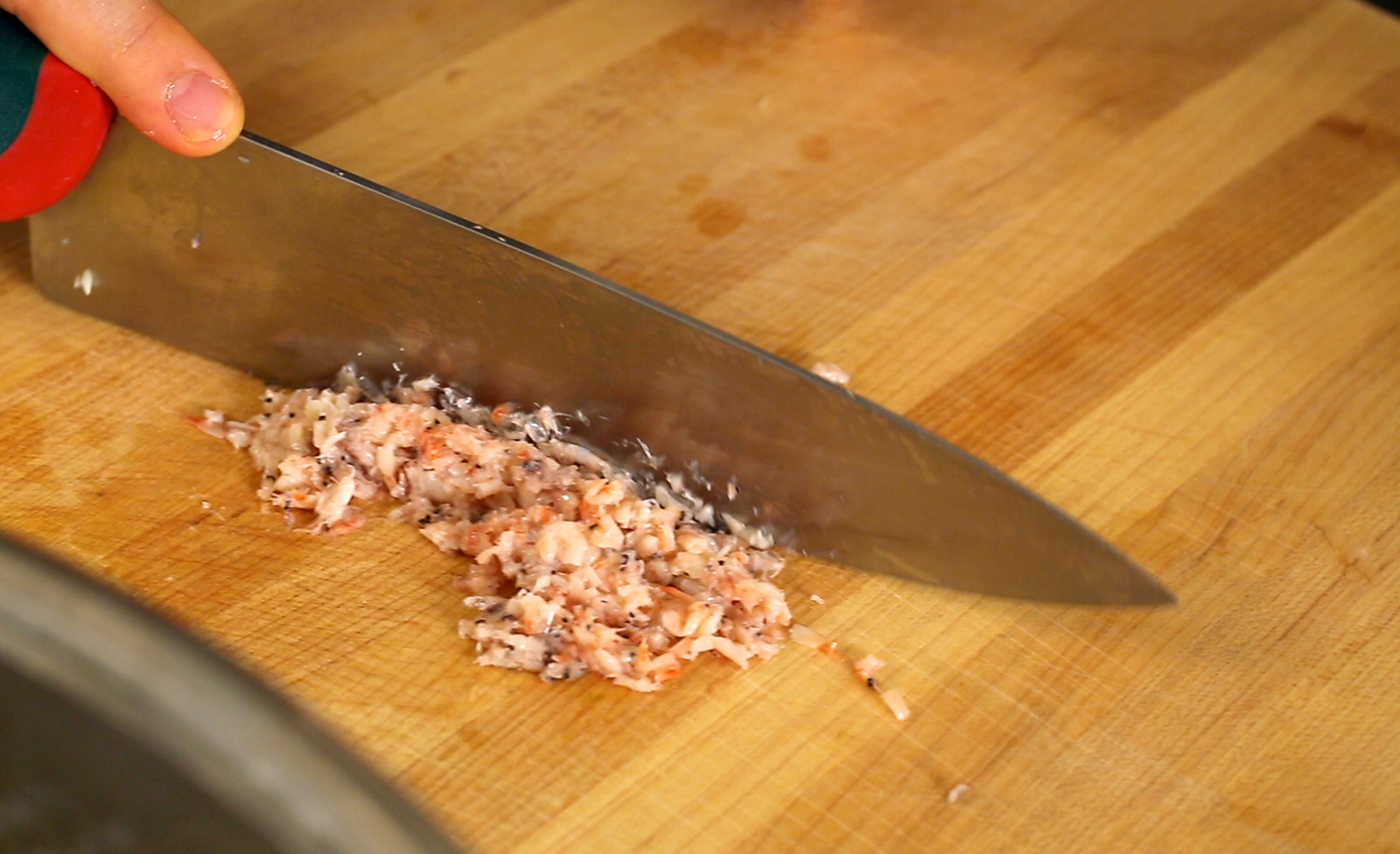
- 1/4 cup fermented salted shrimp saeujeot
- 2 cups gochugaru
Do not substitute gochugaru with regular chili
Korean chili flakes have a different color, flavor, and spiciness. They are what create the typical character of kimchi.
You can omit the buchu and minari.
They will add a more authentic tone, but the recipe will work without them. Replace them with more spring onions.
Do not fill the container to the brim.
Kimchi will release juices and may bubble during fermentation. Leave room for it.
Prepare and salt the cabbage
Salting is the basis of traditional kimchi. The cabbage softens, releases water, and prepares to accept the paste between the individual leaves.
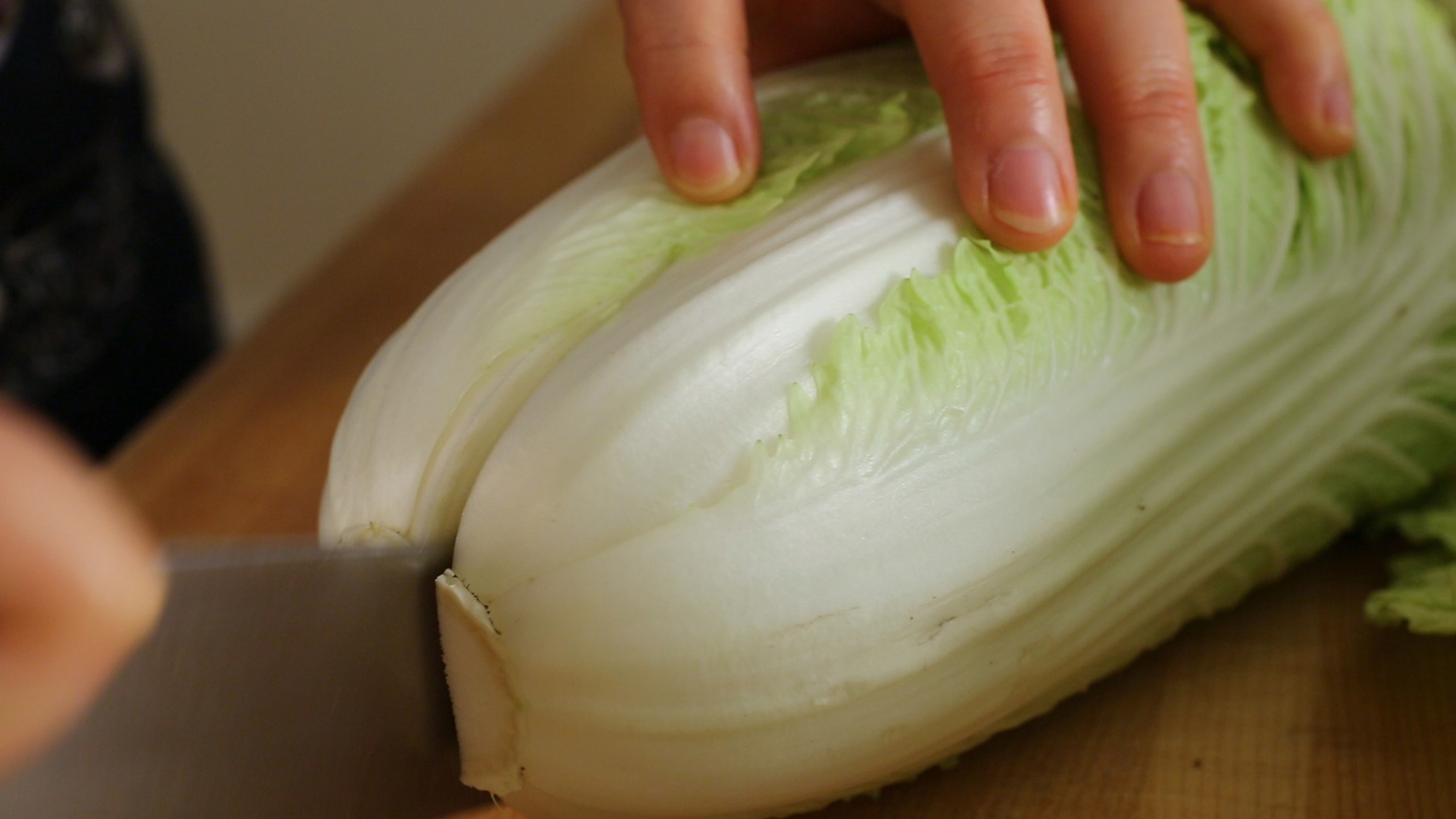
Divide the cabbage
If the cabbage has a very prominent core, trim it off gently. Make a short cut at the bottom of the cabbage and then split it in half with your hands. This will keep the leaves whole and reduce tearing.
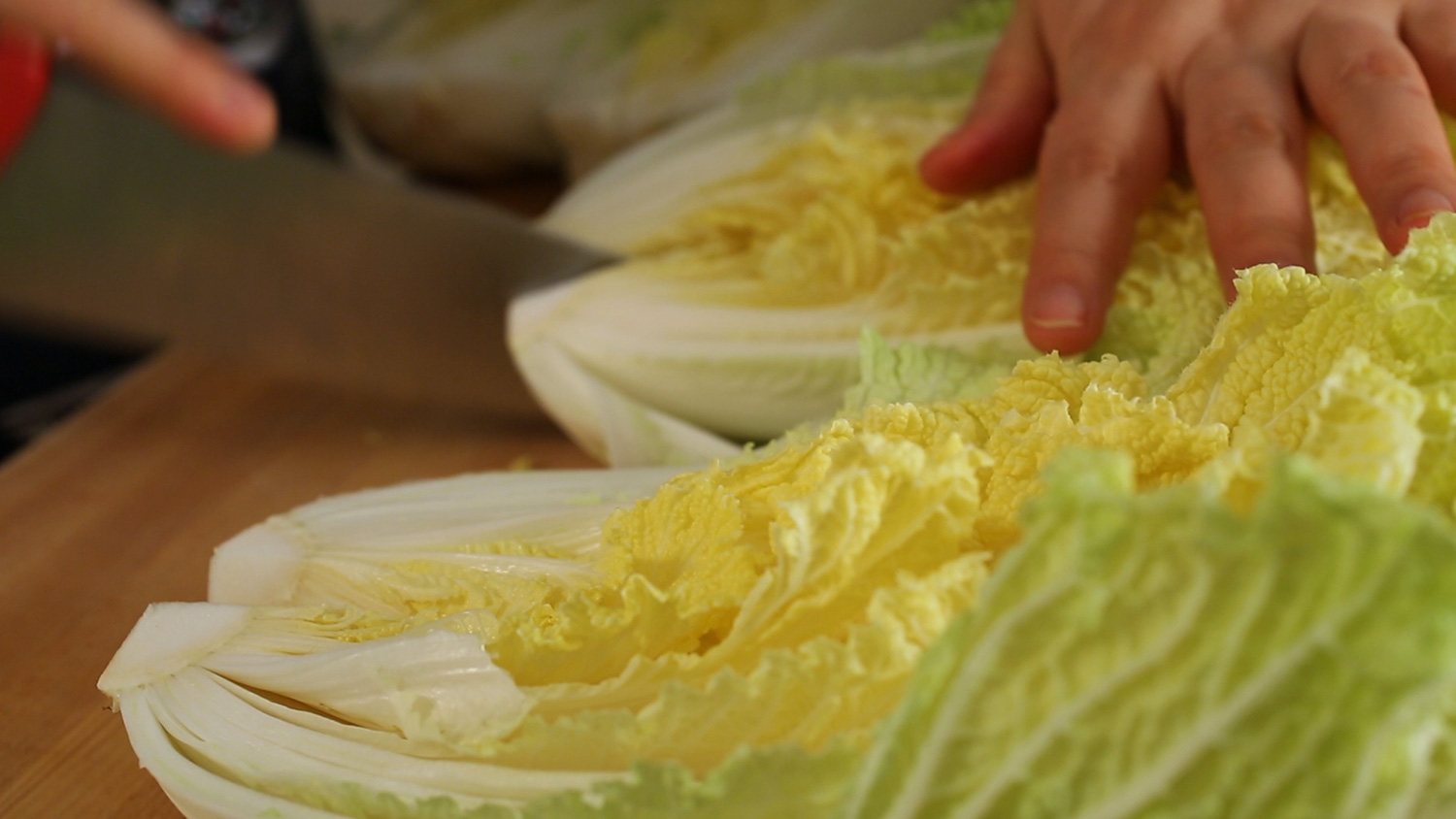
Prepare a slit through the core
Make a short cut into the core of each half, about 2 inches (5 cm) above the stem. The leaves should still be attached at the core, but the cabbage will easily separate into quarters later.
Salt the leaves
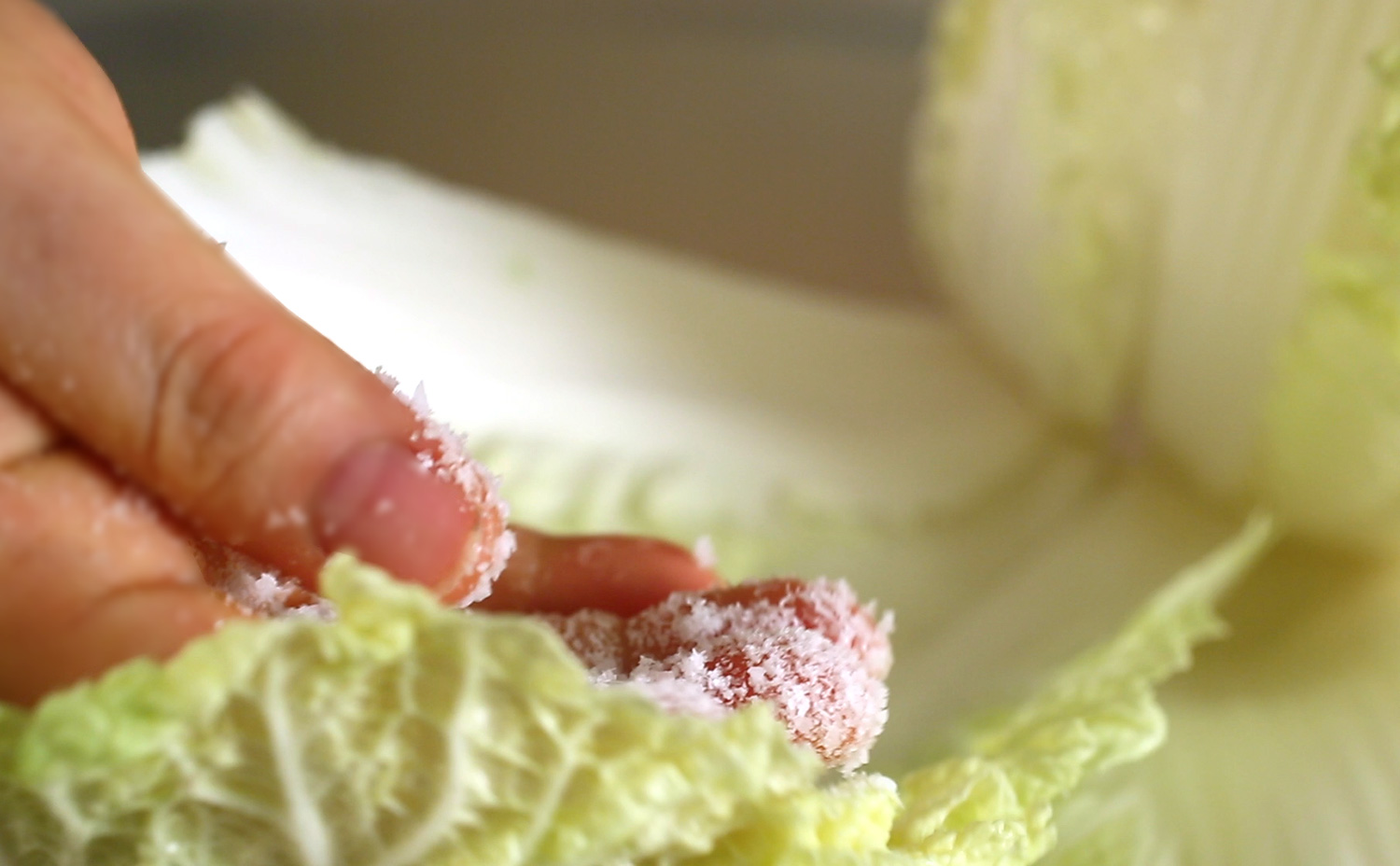
Dip the cabbage halves in water to wet them. Then sprinkle salt between the individual leaves. Add more salt to the stems where the leaves are thicker.
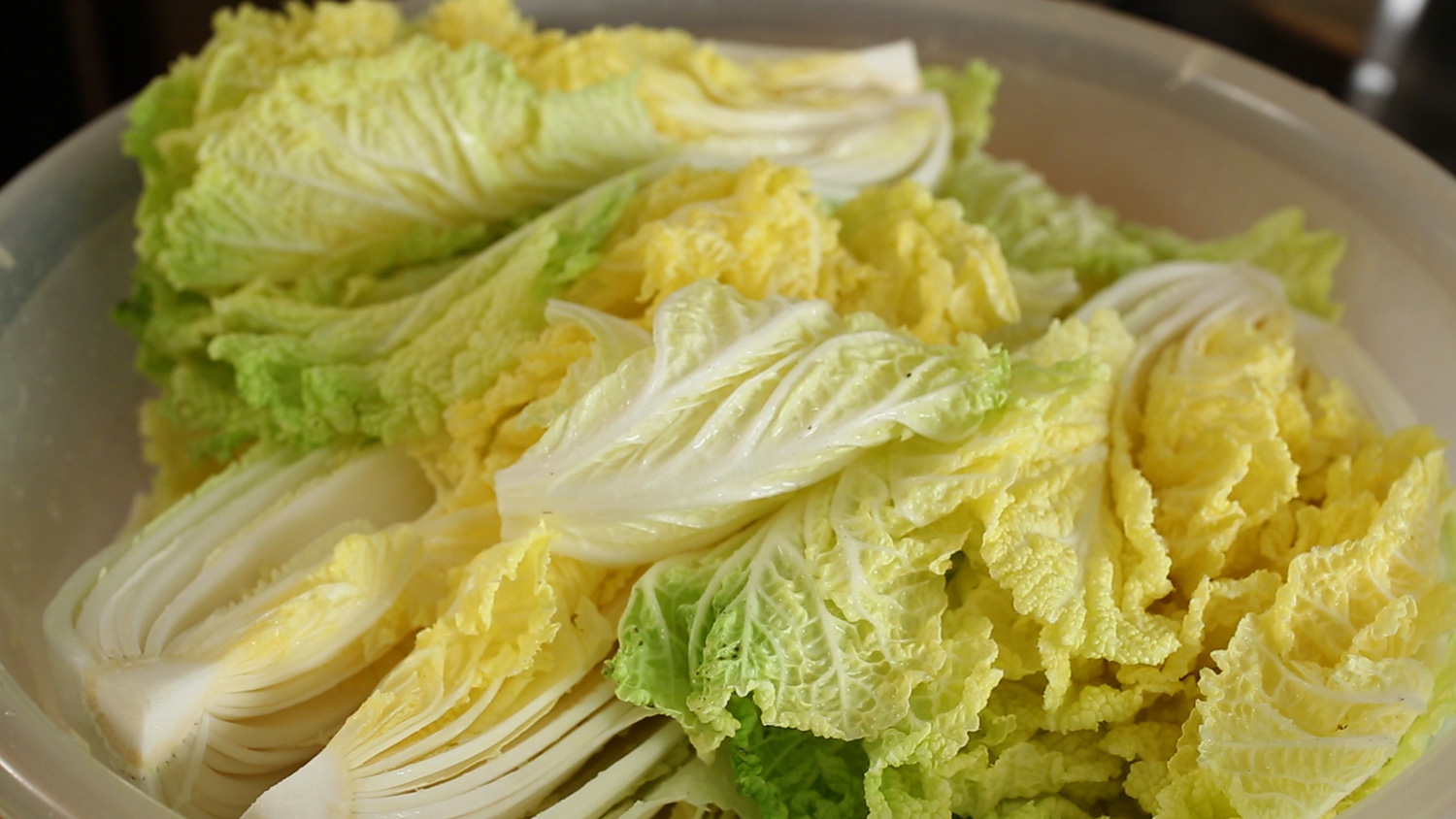
Let the cabbage rest.
Let the cabbage sit for about 2 hours. Turn it every 30 minutes to ensure even salting. You can pour the brine from the bottom of the container over it as you go.
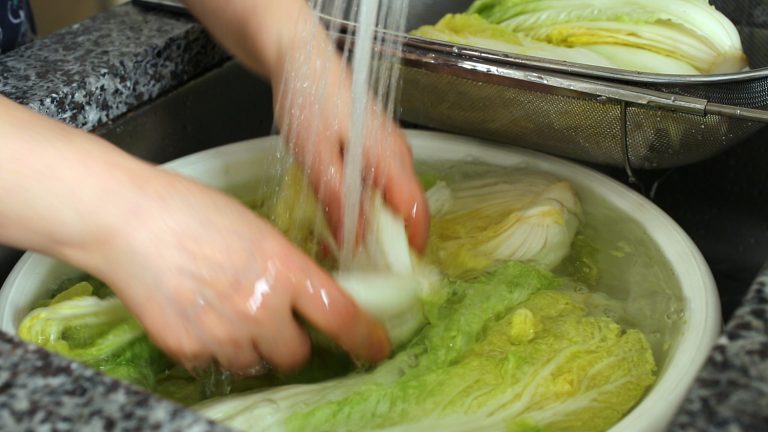
Rinse and drain.
After 2 hours, rinse the cabbage several times under cold water. Divide it into quarters, cut off the hard cores and let it drain well in a sieve.
Prepare the kimchi paste
While the cabbage is soaking in salt, prepare the rice porridge and spicy red paste, which will give kimchi its typical color, aroma, spiciness, and umami flavor.
Cook rice porridge
In a small saucepan, combine the water and sweet rice flour. Cook for about 10 minutes until the mixture starts to bubble and thicken. Add the sugar, cook for another minute, and let cool completely.
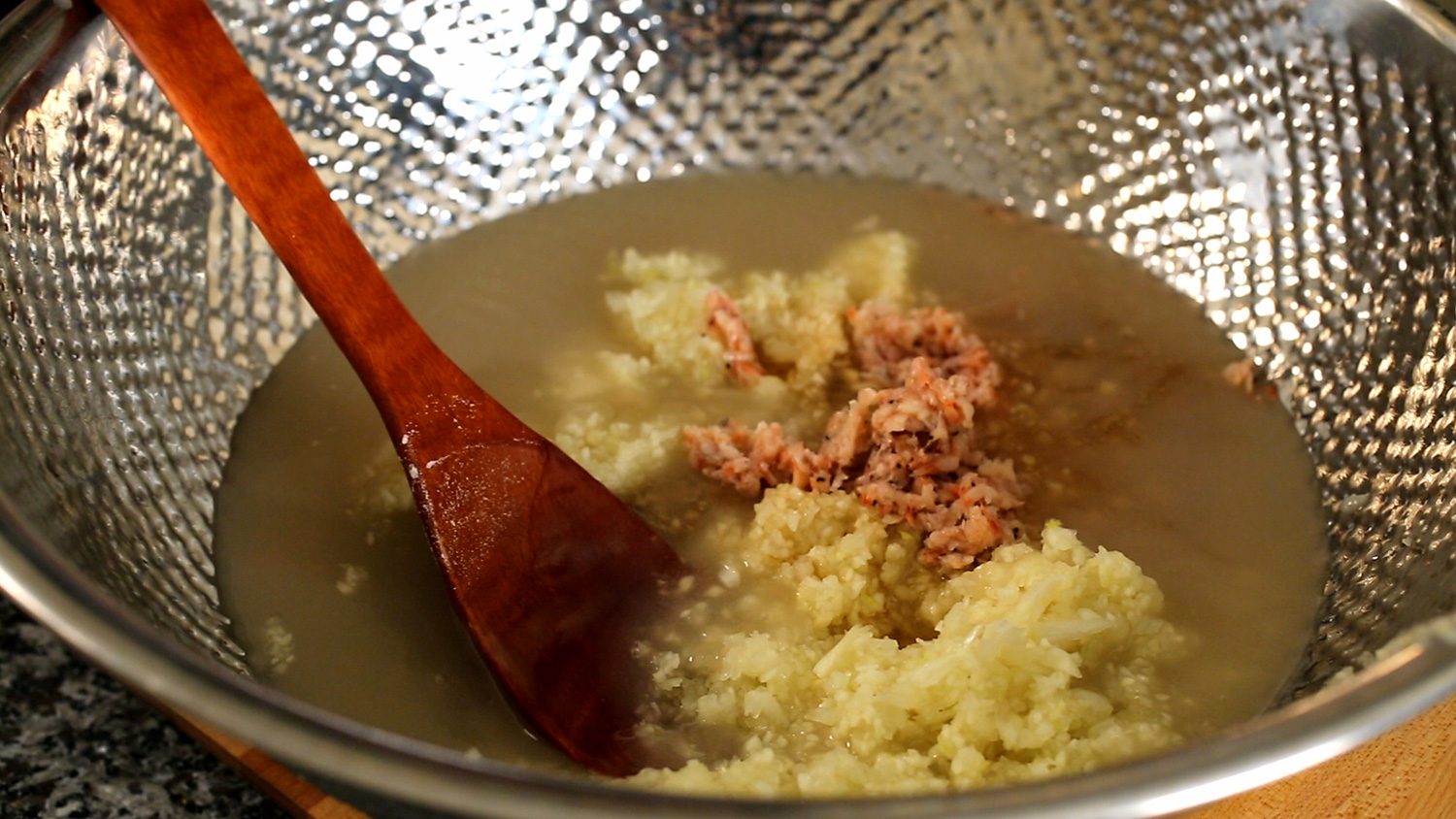
Add aromatic ingredients
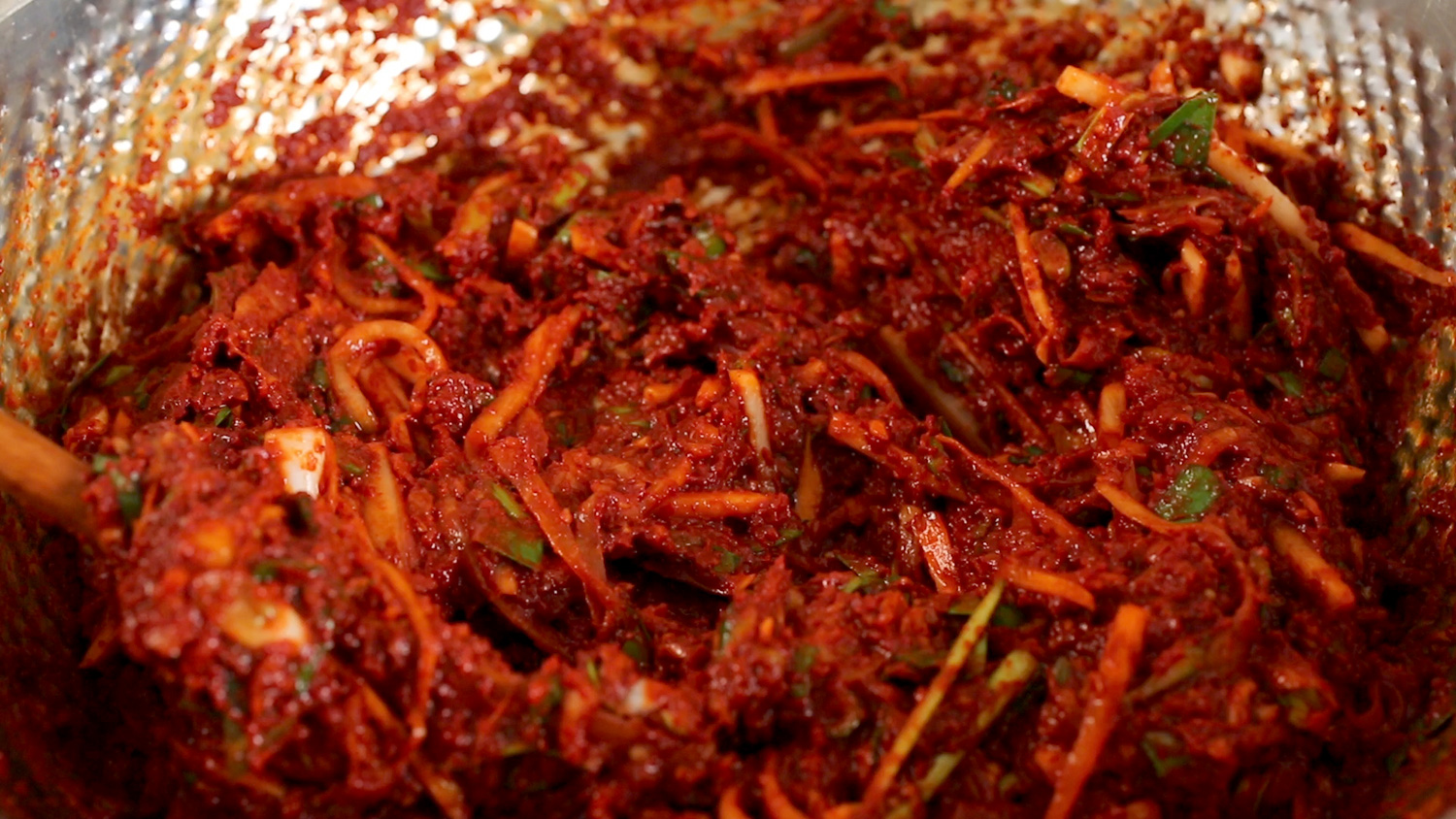
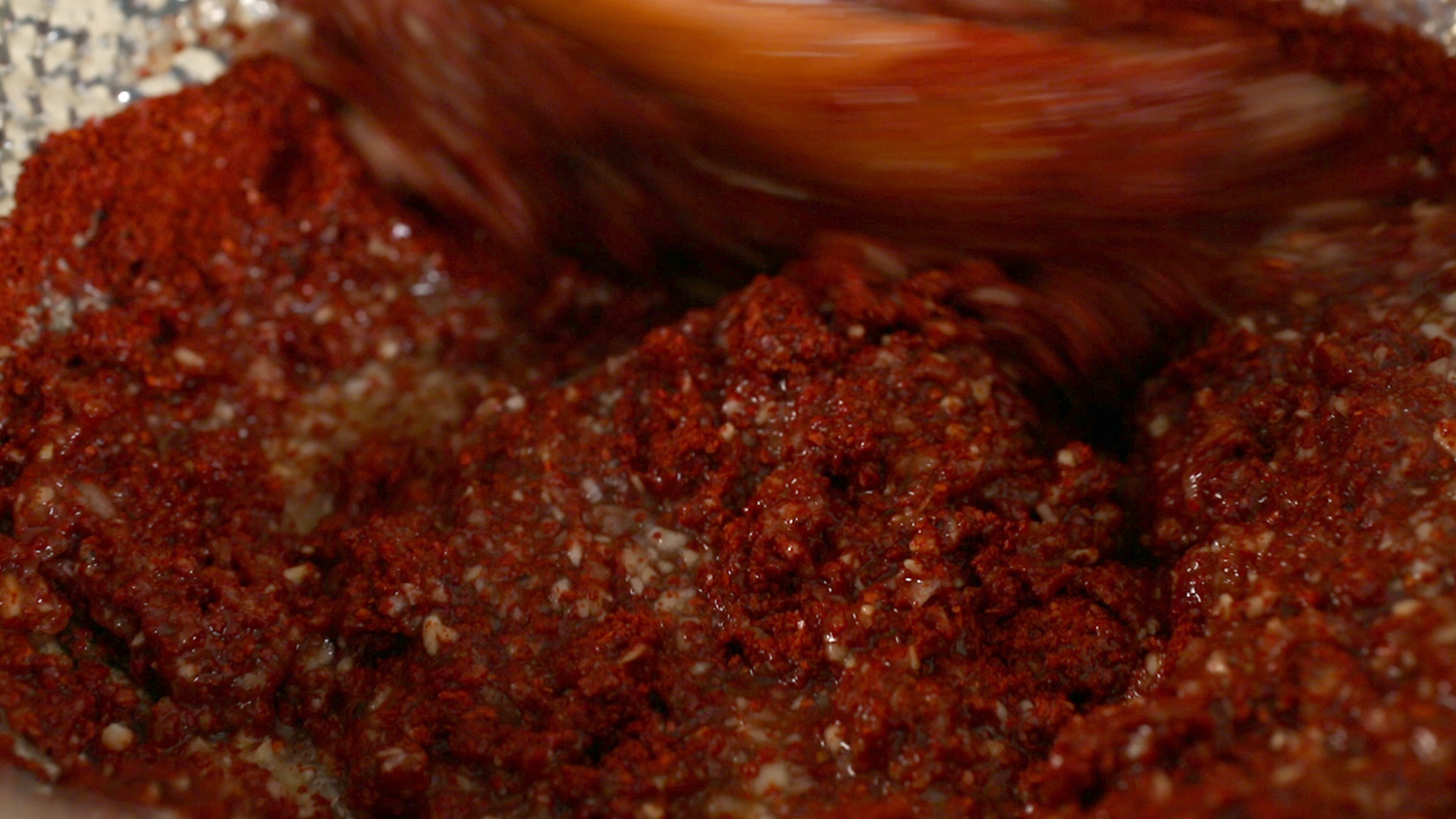
Add garlic, ginger, onion, fish sauce, fermented salted shrimp, and gochugaru to the cooled porridge. Stir until a thin red paste forms.
Create a flavor base
The paste should be bold, red, and aromatic. It determines how spicy, salty, and deep the finished kimchi will be.
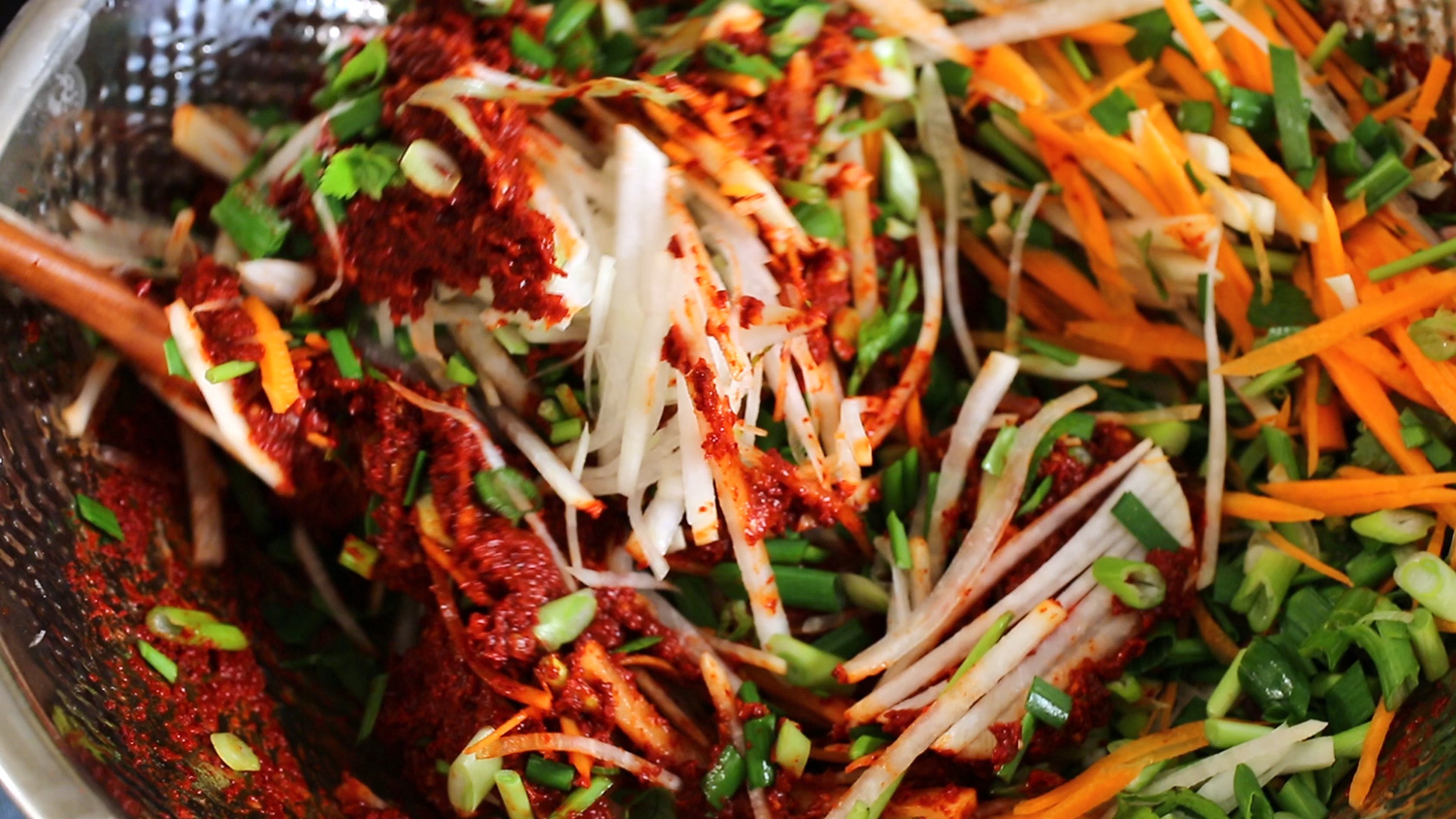
Stir in the vegetables.
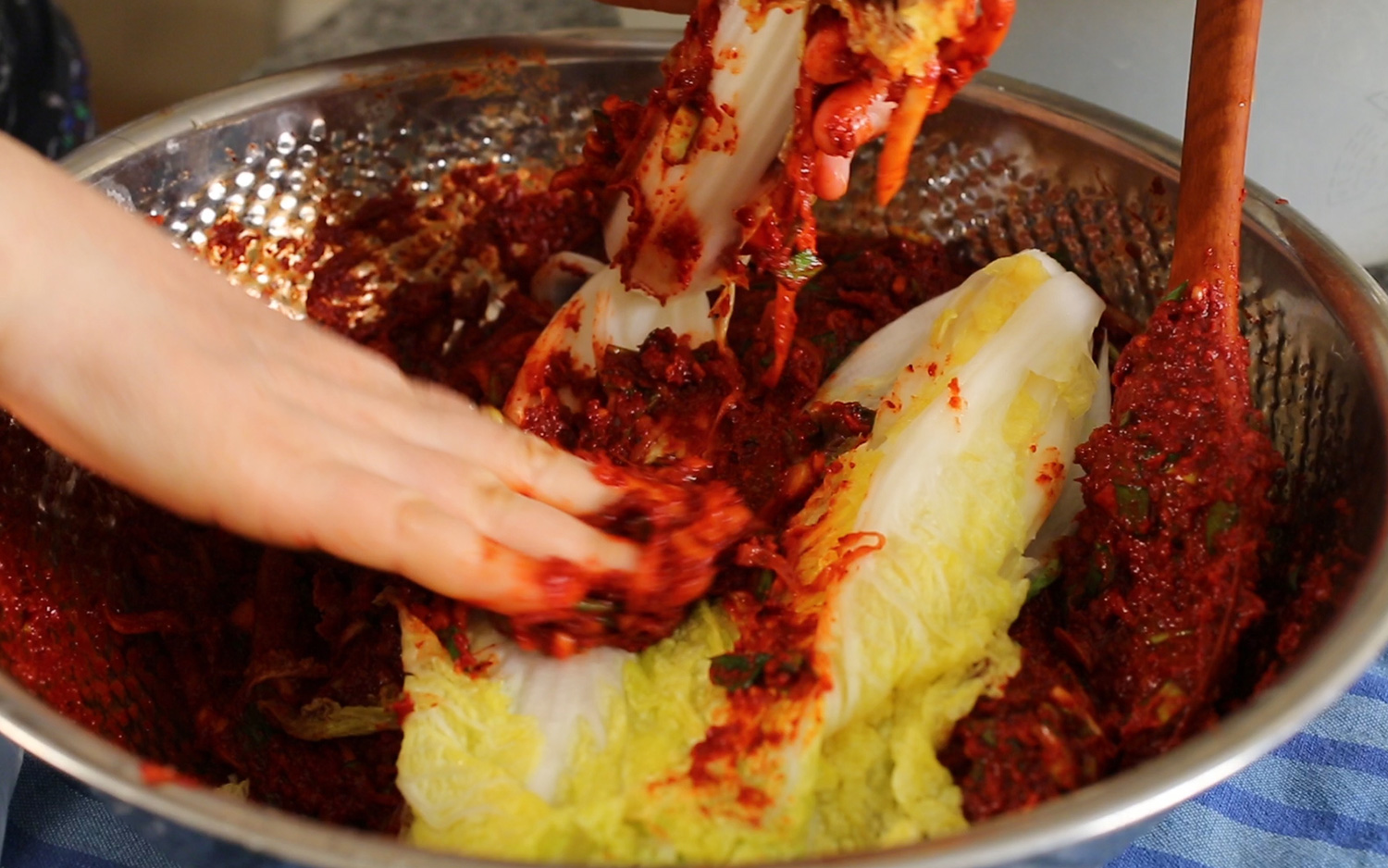
Add the radish, carrot, spring onion, or Asian chives and minari. Mix everything together so that the vegetables are evenly coated with the paste.

Red chilli powder LIM GA NE 1000g
Tower Red Chili Pepper Powder DAE KYUNG 500g
Red chilli powder LIM GA NE 500g
Coat the cabbage with kimchi paste
Prepare a large work surface, a bowl of kimchi paste, and drained cabbage. It's a good idea to wear oven gloves while working, as gochugaru and garlic can irritate the skin and the paste will stain significantly.
Take one quarter of the cabbage and gradually spread the paste between each leaf. You don't need to put a large amount on each leaf, it's important to spread it evenly.
Once the cabbage is covered in the paste, wrap it in a compact package and place it in a clean container.
Kimchi fermentation
You can eat kimchi right after preparation as fresh kimchi, or let it ferment at room temperature.
How do you know if kimchi is fermenting?
Kimchi will start fermenting after about 1 to 2 days at room temperature. The speed depends on the temperature and humidity in the room.
As fermentation begins, the kimchi will smell and taste more sour. If you gently press it with a clean spoon, bubbles may come out of the bottom.
Then, move it to the refrigerator. The cold will slow down the fermentation, but it won't stop it completely. The kimchi will gradually mature and its flavor will deepen.
Crunchy and less acidic
Suitable immediately after preparation or after a short period of aging. It has a distinct spiciness, but not yet a strong acidity.
More sour and deeper
After a few days to weeks in the refrigerator, the flavor will intensify and the kimchi will take on a more complex character.
Ideal for cooking
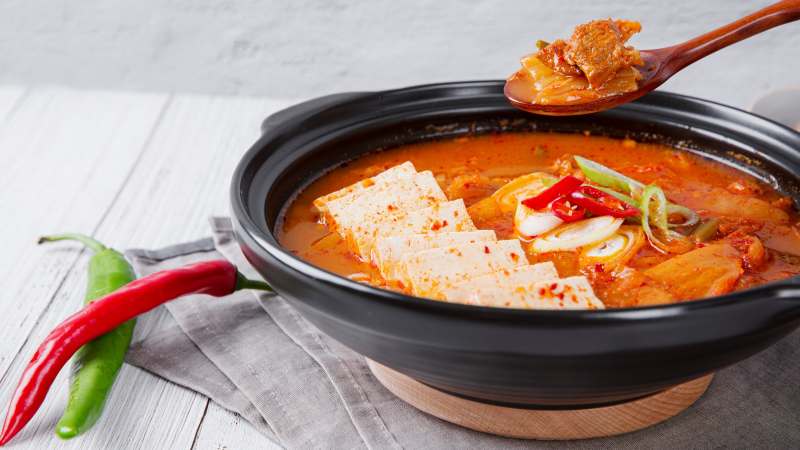
The more sour kimchi goes great with kimchi jjigae, kimchi ramen, or kimchi fried rice.
What to serve kimchi with?
You can serve traditional kimchi as a side dish or use it as a distinctive ingredient in other dishes.


Video recipe
With traditional kimchi, it helps to see how the cabbage is divided, salted, rinsed, and coated with a paste.
Homemade kimchi takes time, but it's worth it
Making traditional kimchi is not a quick recipe that takes a few minutes, but most of the work is easy. The reward is a large batch of kimchi that gradually changes in the refrigerator: fresh is crunchy and spicy, ripe is more sour and deeper.

















Robila som raz,bolo vyborne,vsetko ako tu,okrem kvaky....
Ďakujem spoločnosti Foodland za perfektné recepty, ktoré uverejňuje na svojom webe. Kimchi som robila začiatkom roka a celá rodina si ho veľmi pochvaľovala. Túto kuchárku mám veľmi rada, recept ukáže krok za krokom a všetko, čo som podľa jej rád robila mi vyšlo úplne špičkovo. Ďakujem.
No...ja neviem... O ázijskú kultúru sa zaujímam už fakt hodne dlho a mimo iného som istý čas komunikoval aj (o.i.) s ľuďmi z kórejského veľvyslanectva. Tí ma (o.i.) nasmerovali na slovenských (kórejských, ale na Slovensku) buddhistických mníchov, od ktorých recept na kim-čchi sám mám. Kim-čchi MUSÍ obsahovať 5 základných ingrediencií, ostatné sú voliteľné. Tých 5 je: kapusta napa (u nás postačí jej ekvivalent - pekingská kapusta), vodnica (u nás sa dá zohnať len kvaka, ale je to v podstate tá istá zelenina, len kvaka je väčšia), čierna reďkovka (podlhovastá), mrkva a jarná cibuľka. Na pastu je takisto 5 základných surovín: chilli, cesnak, cibuľa, zázvor a kurkuma. Všetko sa to (samozrejme po niekoľkodennej príprave) nakladá do drevených kadí, prikryje dreveným vekom a naňho jeden mních (na to určený, pretože má v oku statiku) naloží vyvarené oblé kamene (balvany, min. hmotnosť jedného je cca 1,5kg), aby veko (a tým aj obsah) bolo neustále ponorené (aby prebiehalo výlučne anaeróbne kvasenie) a nebalansovalo. Základné kvasenie trvá približne 2 mesiace, po ňom je už kim-čchi poživateľné, ale kvalitné kim-čchi kvasí rok aj viac.
To je zaujimave s tou vasou jarnou cibulkou. Lebo pre kimchi je typicka jesenna priprava, kde sa tato potravina nechava zakvasit na zimu. Nieco ako u nas zabijacka a klobasky.
Kimči robia aj cez leto - letné kimči.
Mám záujem o igrecinie
Mozete kupovat podla receptu na stranke.
S poydravom
Mam zaujem.
Add new comment:
Add reply to comment: