




























Bibimbap! (Korean rice bowl)
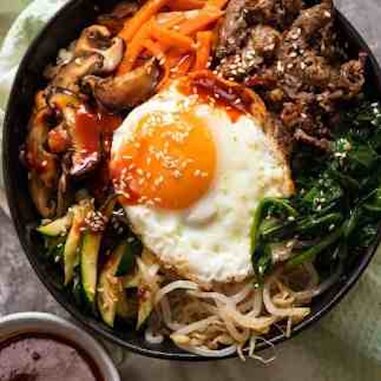
Bibimbap is one of the most famous Korean dishes.
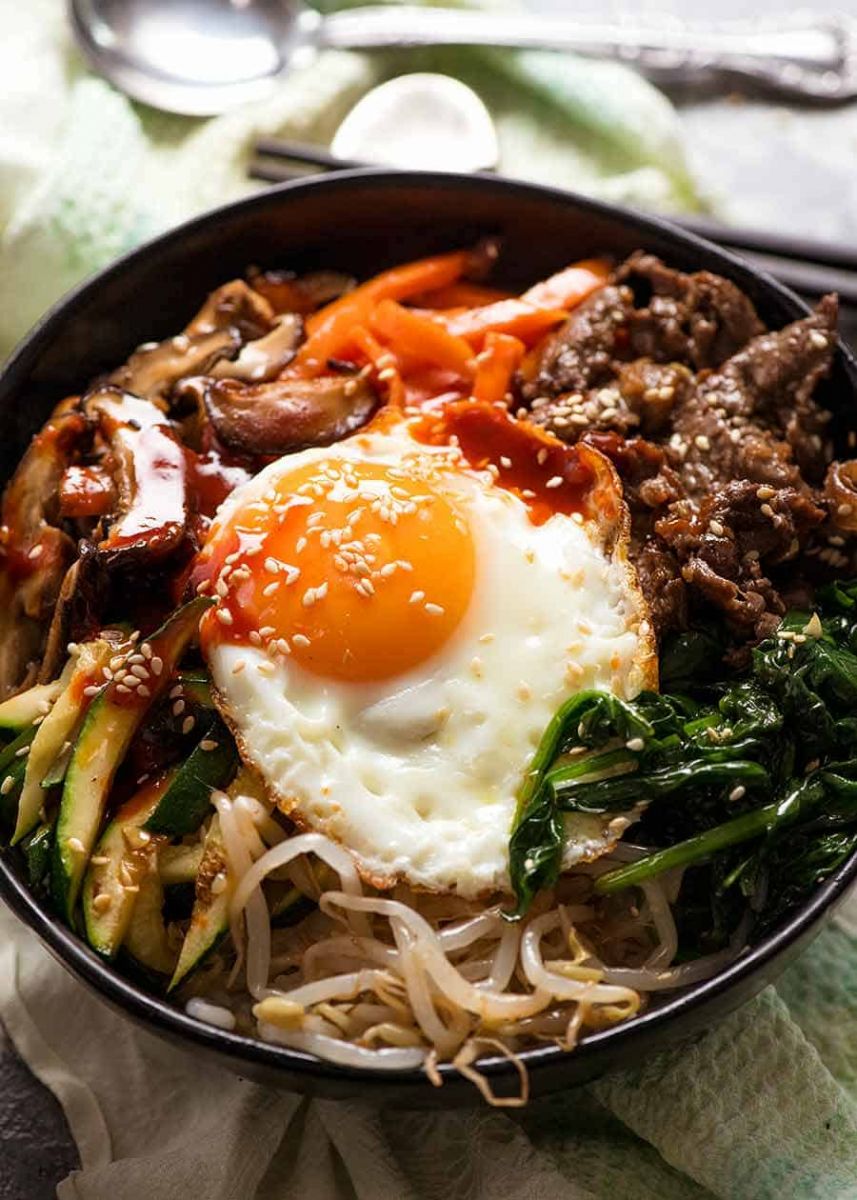
Rice bowl with various types of flavored roasted vegetables, marinated meat (usually beef), with fried egg with the sun side up, garnished with sesame sprinkles and generous sweet-spicy-salty Bibimbap sauce. <- Beware, this sauce is so amazing that you can basically use any vegetable and any meat and your Bibimbap will be delicious!
Recipe from Nagi, RecipeTinEats
For: 4 people / 4 servings
Preparation: 40 min, cooking: 30 min. total: 1h10 min.
INGREDIENTS
- 4 cups cooked white rice, preferably short-grain (note 1)
- 4 eggs
- 2 teaspoons sesame seeds
KOREAN MARINATED BEEF
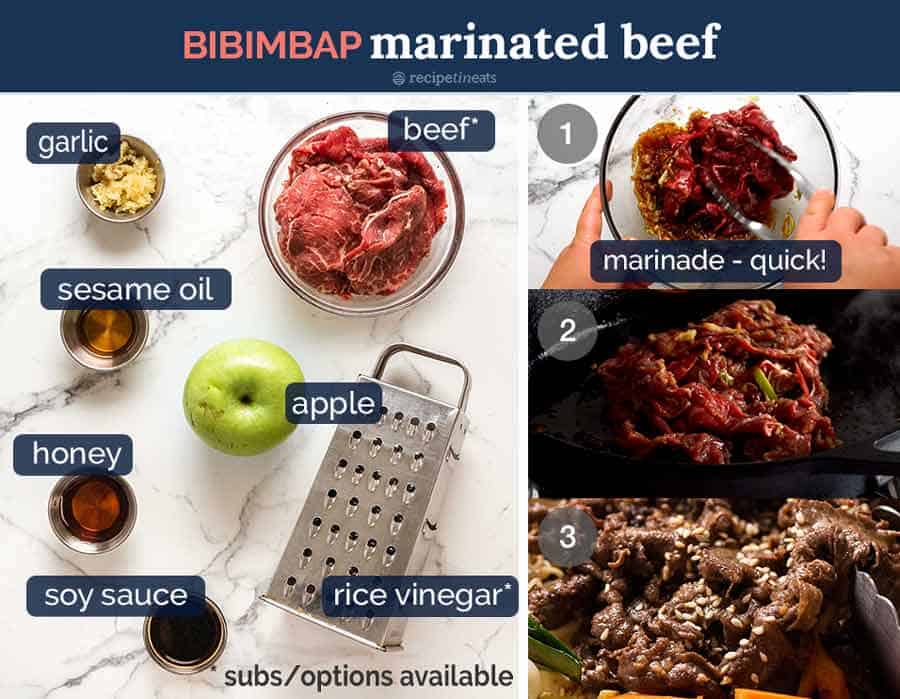
- 250 g beef tenderloin or thick steak, very finely sliced (note 2)
- 1/4 green apple, grated (note 3)
- 3 garlic cloves, minced
- 1 tablespoon soy sauce, (light or all-purpose) (note 4)
- 1 tablespoon honey (or brown sugar)
- 2 teaspoons toasted sesame oil (note 9)
VEGETABLES:
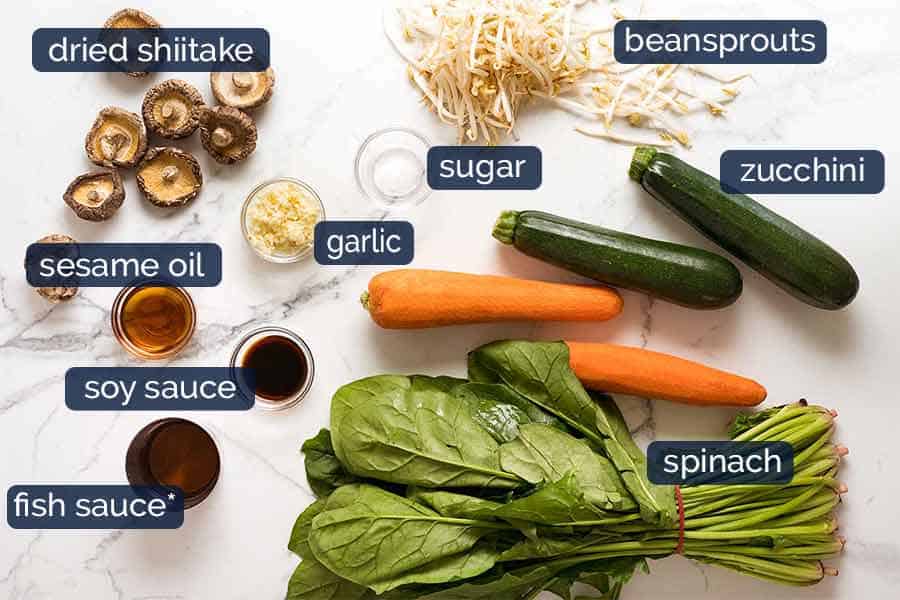
- 2 large carrots, cut into sticks 5 x 0.5 cm
- 2 large zucchinis, cut into sticks 5 x 0.5 cm
- 1 bunch spinach, chopped into 5 cm pieces
- 8 large dried shiitake mushrooms (note 5)
- 4 cups bean sprouts
- 2 teaspoons garlic, minced (3 cloves)
- 8 teaspoons vegetable oil, separated
- 1/2 teaspoon salt
- 1.5 teaspoons soy sauce, light or all-purpose (note 4)
- 1/4 teaspoon fish sauce (soy-based)
- 1/4 teaspoon white sugar
- Toasted sesame oil (note 9)
BIBIMBAP SAUCE:
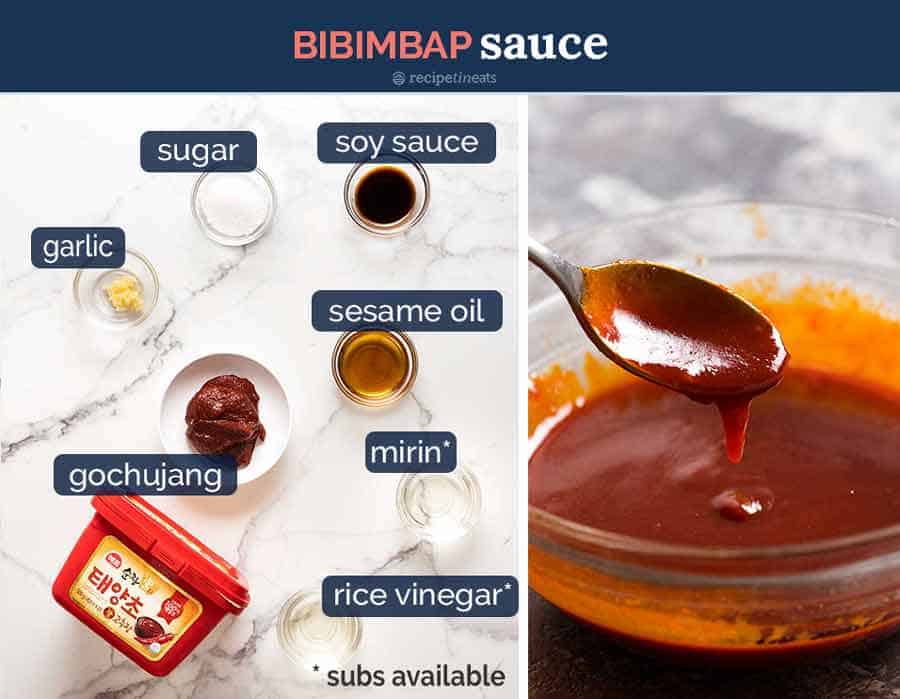
- 4 tablespoons gochujang paste (note 6)
- 2 tablespoons mirin (note 7)
- 2 tablespoons rice vinegar (note 8)
- 1.5 teaspoons soy sauce (note 4)
- 3 teaspoons white sugar
- 1 garlic clove, finely grated
- 2.5 teaspoons toasted sesame oil (note 9)
INSTRUCTIONS
BIBIMBAP SAUCE:
- Mix ingredients until sugar dissolves.
- Marinated Beef:
- Mix the marinade in a bowl, then add the beef. Marinate for 30 minutes to overnight.
- Heat 2 teaspoons oil in a large pan over high heat. Drain excess marinade and then add the beef. Cook for 3 - 4 minutes until cooked and caramelized bits form, then remove from the pan.
- Keep warm until needed or reheat.
PREPARE THE VEGETABLES:
- Shiitake: Soak mushrooms for 30 minutes in a large bowl of boiling water or rehydrate them. Drain, squeeze out excess water, then slice.
- Salt the carrots and zucchini (optional, note 10): Place carrots and zucchini in separate bowls, sprinkle each with 1/4 teaspoon salt, mix, let sit for 20 minutes, then drain the excess liquid.
VEGETABLES:
- If you can, use 2 pans!
- Shiitake: Heat 2 teaspoons of sesame oil in a pan over medium-high heat. Cook mushrooms for 2 minutes. Add 1.5 teaspoons soy sauce, 1/4 teaspoon sugar, 1/2 teaspoon garlic. Stir for 1 minute, then remove.
- Carrots: Add 2 teaspoons oil to the pan, cook carrots just slightly (5 to 8 minutes), then remove.
- Zucchini: Cook in the same manner as carrots for 4 minutes.
- Spinach: Heat 2 teaspoons vegetable oil with a few drops of sesame oil. Sauté until it begins to wilt. Add 1/2 teaspoon garlic and salt to taste, stir, then remove. After cooling, press to remove excess liquid.
- Bean sprouts: Sauté in water for 5 minutes until soft. Drain under cold water, then cool. Squeeze out excess liquid and place in a bowl. Mix with 2 teaspoons sesame oil, 1 teaspoon garlic, 1/4 teaspoon fish sauce.
- Vegetables can cool to room temperature or remain slightly warm.
ASSEMBLY:
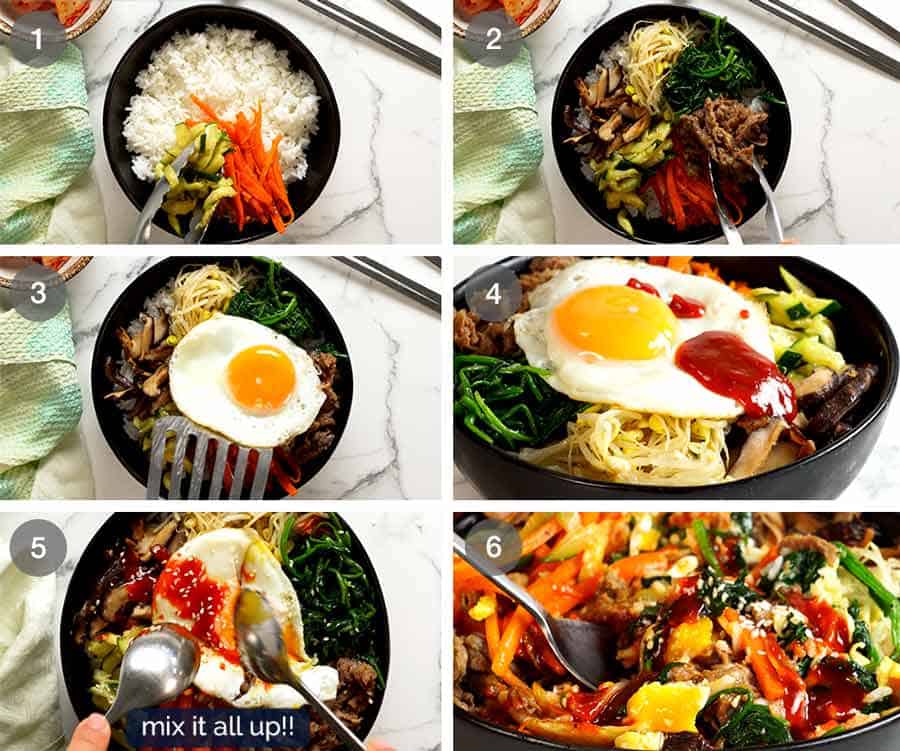
- Fry the egg in a pan to your liking (best with runny yolks).
- Place warm rice into bowls.
- Top with vegetables and beef as shown in the post, and finally, add the egg.
- Sprinkle with sesame seeds and drizzle with sesame oil. Serve with Bibimbap sauce!
Recipe Notes:
Note 1: Short grain rice, ideal for Bibimbap, is sticky enough to mix well with the sauce.
Note 2: Slice the beef into thin slices about 1mm thick, or use a meat slicer.
Note 3: The apple tenderizes the beef while adding a hint of sweetness.
Note 4: Use light soy sauce, but adjust with regular soy sauce if needed.
Note 5: Use dried shiitake mushrooms for a more authentic flavor.
Note 6: Gochujang adds spicy, fermented depth to the dish.
Note 7: Mirin adds sweetness to balance out the spiciness of the gochujang.
Note 8: Rice vinegar helps balance the flavors in the sauce.
Note 9: Toasted sesame oil gives an added nutty flavor.
Note 10: Optional step to reduce the moisture of vegetables.

















Úžasne dobré jedlo mňam!!!!!
Add new comment:
Add reply to comment: