




























Ice Cream Mochi: How to Make it at Home

Make homemade ice cream mochi with soft rice dough and your favorite ice cream. The recipe includes how to prepare the dough in the microwave or steam, packaging tips, and solutions to common mistakes.

Japanese dessert step by step
A soft, springy rice dough encasing creamy ice cream. Learn how to make homemade ice cream mochi in the microwave or steamer.
A modern take on a Japanese classic
What is ice cream mochi?
Ice cream mochi is a small frozen dessert in which a portion of ice cream is wrapped in a thin layer of sweet, soft, and springy rice dough. It is based on the traditional Japanese mochi, but the ice cream filling is a more modern take on it.
You don't need many ingredients to make homemade mochi, but the right kind of flour and good organization are key. The ice cream needs to be completely firm and you need to work the dough quickly so it doesn't melt while you're wrapping it.
Important: Use only glutinous rice flour . Regular rice flour will not create the elastic, stretchy dough needed for mochi. The term “glutinous” describes the properties of the rice, not the presence of gluten.

Basic recipe
Ingredients for 12 pieces
Master the neutral base first. You can later change the flavor of the dough and filling according to the variations below.
Also prepare: an ice cream scoop or sturdy spoon, baking paper, a rolling pin, a 9–10 cm round cookie cutter, and a muffin tin or small bowls to help the mochi keep its shape.
Step-by-step preparation
How to make homemade ice cream mochi
First, prepare and thoroughly freeze the ice cream. Only start cooking the dough when all the filling portions are completely firm.
Shape ice cream portions
Divide the ice cream into 12 portions of approximately 20–25 g each. Place them in small silicone or paper cups and freeze for at least 3–4 hours, ideally overnight. They must be completely solid.
Knead a smooth dough
In a container suitable for cooking, mix the glutinous rice flour with water. When the mixture is smooth and lump-free, add the sugar and mix thoroughly again.
Microwave preparation
Cover the bowl loosely with foil or a suitable lid. Heat for 1 minute at approximately 1000W, stir with a damp silicone spatula, heat again for 1 minute and stir. Then add in 20–30 second intervals until the dough is shiny, elastic and almost translucent, with no raw white spots.
Attention: adjust the time according to the power of your microwave.
Steam preparation
Place the bowl with the dough in the steamer. Cover the lid with a clean towel to prevent condensation from dripping into the dough. Cook for about 15–20 minutes; stir the dough with a damp spatula halfway through. It is done when it is evenly elastic, shiny, and almost translucent.
Roll out and chill the dough
Generously sprinkle a work surface or baking paper with cornstarch. Turn out the hot dough, dust the surface with starch and, after it has cooled slightly, roll it out to a thickness of about 3 mm. Transfer it, along with the paper, to a baking sheet and refrigerate for 15 minutes.
Prepare the packaging
Cut out circles with a diameter of 9–10 cm from the cooled dough. Lightly dust off excess starch. Place each circle on a separate piece of cling film and return the prepared layers to the refrigerator.
Quickly pack ice cream
Remove only one portion of ice cream from the freezer at a time. Place it in the center of the dough, pull the edges up and pinch them together tightly. Use the mochi foil to seal and shape into a ball. Return the finished piece to the freezer immediately.
Let the mochi firm up.
Freeze all wrapped pieces for at least 2–3 hours. Leave them at room temperature for 5–10 minutes before serving, so that the outer layer softens slightly and acquires the typical springy consistency.
One dough, many options
Three popular flavor variations
The process remains the same, except for the ice cream flavor and a small amount of ingredient that you can use to flavor the rice dough itself.
Swipe to the side →
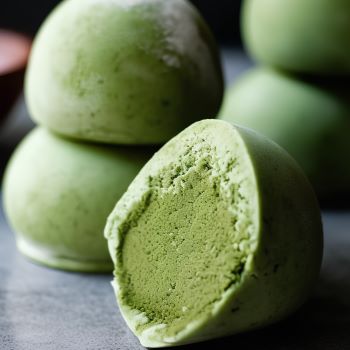
Matcha mochi
Sift 4–5 g of matcha powder into the dry flour and continue as per the basic recipe. Fill with vanilla or matcha ice cream.

Fruit mochi
The easiest and most reliable version is a neutral dough with mango, strawberry or raspberry ice cream. For a more pronounced taste, you can add 8–10 g of fine freeze-dried fruit powder to the flour and 1 extra tablespoon of water if necessary.

Chocolate mochi
Sift 8g of good quality unsweetened cocoa into the flour and add about 1 tablespoon of extra water. The dough goes great with chocolate, vanilla or coconut ice cream.
To make mochi successful
Practical packing tips
Leave the remaining portions of ice cream in the freezer. Even a short amount of extra time can cause the filling to start to soften.
Mochi is easier to wrap away from a hot oven, stove, or direct sunlight. A chilled baking sheet can also help.
Use plenty of it on your work surface, but dust off any excess before closing the dough. Dusty edges will not stick together as well.
Completely solid ice cream on the first try is more important than a perfectly round shape.
Quick help
The most common errors and their solutions
| Problem | Probable cause | Solution |
|---|---|---|
| The dough is not elastic. | You used plain rice flour or the dough is not cooked through. | Use glutinous rice flour and continue to heat briefly until the dough is shiny and almost translucent. |
| The dough is very sticky. | With mochi, the stickiness is natural, but the surface lacks starch. | Dust your work surface, rolling pin, and hands with starch. However, do not dust the edges you want to join. |
| The ice cream is leaking. | The filling was not completely frozen or you worked too slowly. | Freeze the portions for several hours and remove them one at a time. Refreeze any portion that melts. |
| The packaging has hardened in the freezer. | The mochi is too cold or was packaged poorly. | Let it sit for 5–10 minutes before eating and limit air access when storing. |
| Mochi cannot be closed | The circle is small, the dough is thick or the edges are covered with starch. | Roll out the dough to approximately 3 mm, using a 9–10 cm diameter circle and lightly moisten the edges. |
Storage and serving
How long does homemade ice cream mochi last?
Keep each piece wrapped in cling film and store in a tightly sealed container. In the freezer, consume it ideally within 1–2 weeks, until the dough retains a pleasant texture and the dessert absorbs freezer odors.
Don't eat mochi straight from the freezer. Leave it at room temperature for 5–10 minutes - the wrapper will soften slightly, but the ice cream will remain firm.
Buy at Foodland.sk
What you will need
Choose basic ingredients for homemade mochi or try ready-made frozen options.
Swipe to the side →

Glutinous Rice Flour COCK BRAND 400 g
Corn starch VINH THUAN 400 g
Matcha tea SHAN WAI SHAN 80g
Ice cream Yuzu citrus flavor AYUKO 500g
Frequently asked questions
FAQ about ice cream mochi
Can I use regular rice flour for mochi?
No. Regular rice flour will not create a stretchy, elastic dough. You need glutinous rice flour, which can also be called glutinous rice flour or sweet rice flour.
Why is sugar important in dough?
Sugar doesn't just add sweetness. It helps the mochi stay softer even after freezing, so we don't recommend leaving it out completely.
Can mochi be made without a microwave?
Yes. You can cook the dough in a steamer for about 15–20 minutes. Stir it halfway through cooking and watch the consistency, not just the time.
Why did my mochi harden after freezing?
Fresh from the freezer, it is naturally firm. Let it soften for 5–10 minutes before serving. The right ratio of ingredients, sugar in the dough, and airtight storage also help.
How to prevent ice cream from melting when packaging?
Freeze the ice cream until completely solid, work in a cool room, and only remove one portion at a time. Return each wrapped mochi to the freezer immediately.
Do you want mochi without waiting?
Discover frozen Asian desserts and various flavors of ice cream mochi in the Foodland menu.



Super recept
Nagyon szar
Add new comment:
Add reply to comment: