


























Chicken Karaage – crispy Japanese fried chicken
Juicy chicken thighs, an aromatic soy marinade and a light starch coating. Discover authentic Chicken Karaage with a detailed method, double-frying technique and practical tips for an irresistibly crisp finish.
Chicken Karaage – Japanese Fried Chicken
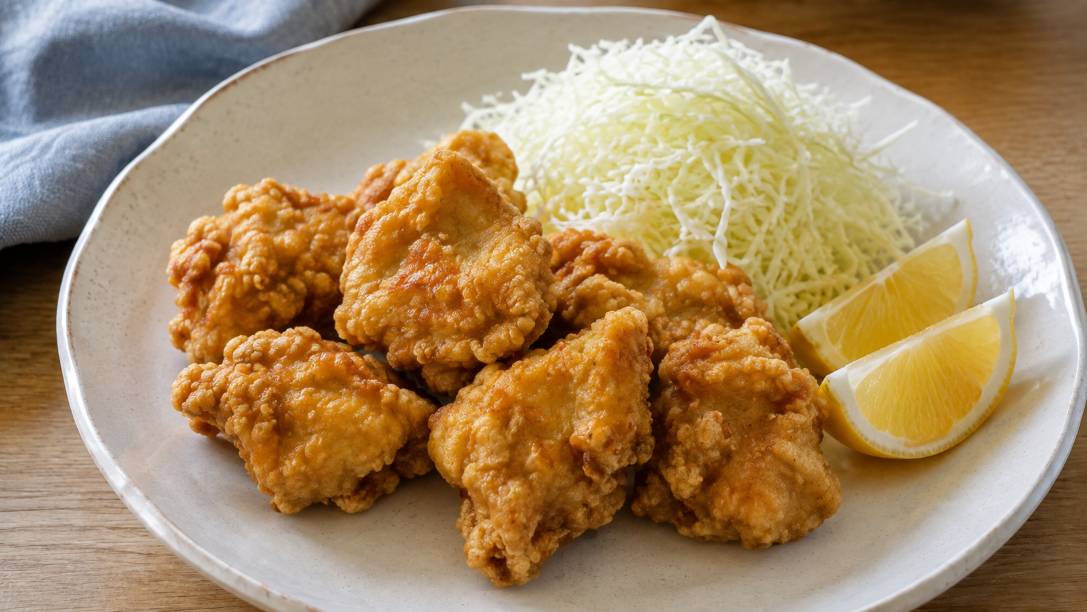
Juicy chicken thigh pieces marinated in soy sauce, sake, mirin and fresh ginger, lightly coated with starch and fried twice. A thin, crisp crust, deep umami and tender meat inside.
What is Chicken Karaage?
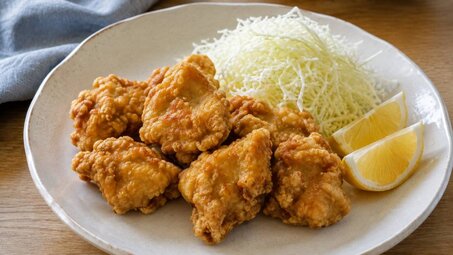
Chicken Karaage is Japanese fried chicken made from boneless chicken thighs marinated in soy sauce, sake, mirin and fresh ginger. The pieces are coated with corn or potato starch and fried twice, creating a thin, crisp crust while keeping the meat juicy inside. Karaage is traditionally served with lemon, cabbage, rice or Japanese mayonnaise.
More than Japanese ‘fried chicken’
Karaage is a Japanese cooking technique: small pieces of meat or other ingredients are seasoned or marinated, lightly coated with flour or starch, then fried. Chicken karaage appeared on Tokyo restaurant menus in the 1930s and is now a staple of izakaya dining, bento boxes and everyday Japanese cooking.
Flavour inside the meat
Soy sauce, sake, mirin and ginger season the meat before it is coated. Karaage therefore needs neither a thick batter nor a heavy sauce.
Thighs rather than breast
Boneless chicken thighs stay juicier at high heat. The skin can be left on—it becomes especially crisp after frying.
A thin, irregular crust
Katakuriko creates a light, craggy crisp surface. Karaage should not look like chicken enclosed in a smooth, even batter.
Karaage, chicken katsu or tempura?
Karaage
Marinated pieces of meat are coated with starch or fine flour and fried without a wet batter.
Chicken Katsu
A whole chicken cutlet is coated with flour, egg and panko, creating a continuous, thicker crust.
Tempura
The ingredient is dipped in a light, cold batter. Unlike karaage, it is usually not marinated before frying.
Ingredients
Cut the pieces to a similar size so they cook at the same rate. One- or two-bite pieces are ideal.
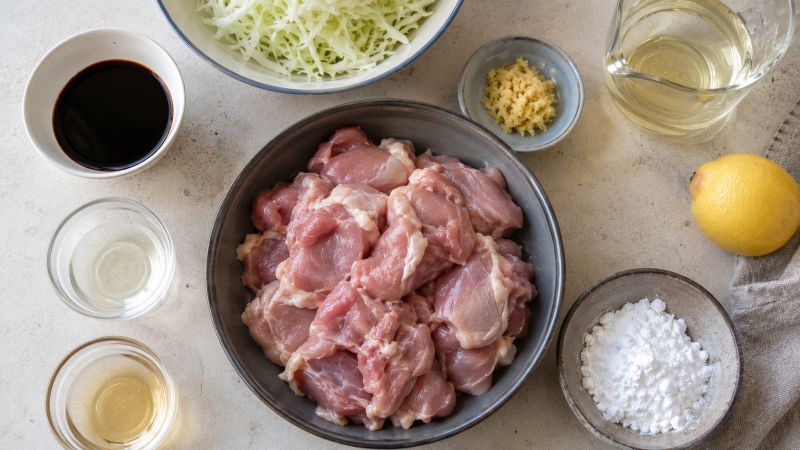
Chicken and marinade
- 700 g boneless chicken thighs, with or without skin
- 30 ml naturally brewed soy sauce
- 30 ml cooking sake
- 5 ml mirin
- 20 g fresh ginger, finely grated with its juice
For coating and serving
- 40–50 g corn starch
- neutral oil for frying, 3–4 cm deep
- ½ lemon, cut into wedges
- finely shredded white cabbage
- Japanese Kewpie mayonnaise – optional
- cooked Japanese rice – optional
How to make Chicken Karaage
Double frying is optional, but at home it creates the most reliable contrast between a crisp surface and juicy meat.
Cut the chicken thighs
Pat the meat dry with paper towels and cut it into larger pieces of about 5 × 4 cm. Trim excess fat; the skin may remain.
Mix the marinade
Combine the soy sauce, sake, mirin, ginger and its juice in a sealable bag or bowl. Add the chicken and massage the marinade thoroughly into every piece.
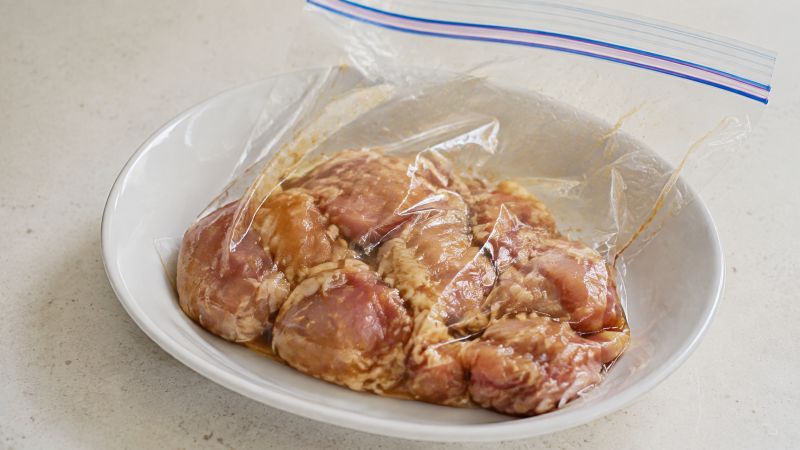
Marinate briefly and pat dry
Marinate the chicken in the refrigerator for 30 to 60 minutes. Drain off the marinade, then gently pat the surface of each piece with paper towels.
Coat with starch
Place the corn starch in a shallow dish. Coat every piece on all sides and gently shake off the excess. Coat the chicken immediately before frying.
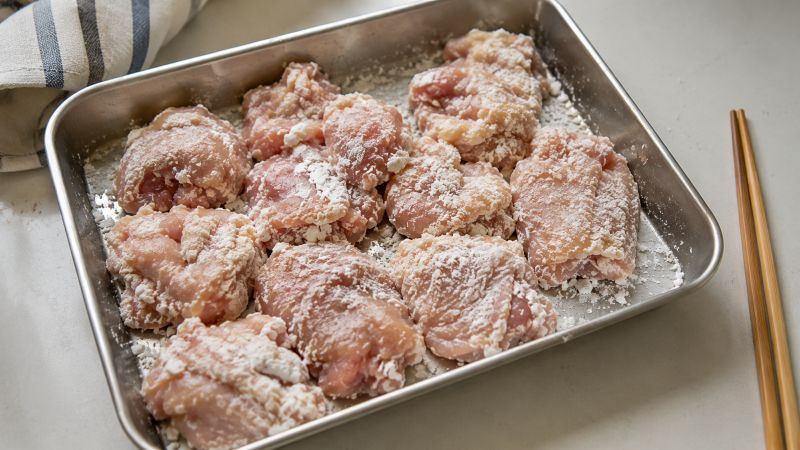
First fry at 160–165 °C
Heat 3–4 cm of oil in a saucepan to 160–165 °C. Fry the chicken in small batches for about 2½ to 3 minutes. In a 20 cm saucepan, cook no more than 5–6 pieces at a time.
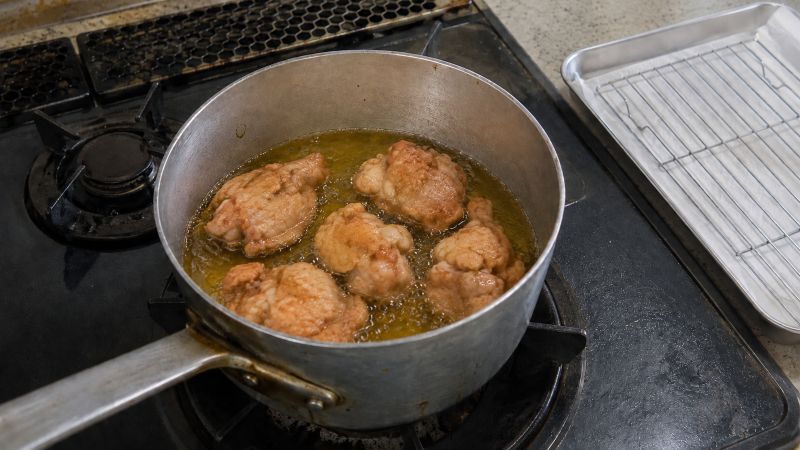
Rest the chicken
Transfer the chicken to a wire rack and rest it for 3 to 4 minutes. Residual heat will gradually travel to the centre.
Second fry at 190–200 °C
Heat the oil to 190–200 °C. Return the pieces for 30 to 60 seconds, until golden and crisp, then drain them on the rack again.
Serve immediately
Rest the karaage for 2 minutes, then serve with lemon, cabbage and Kewpie if desired. Extra salt is usually unnecessary—the marinade provides enough seasoning.
Three rules for perfect crispness
A drier surface
Excess marinade forms a sticky layer and cools the oil. Let the meat drain without wiping away all the flavour.
Small batches
An overcrowded pan lowers the oil temperature. The chicken steams, absorbs oil and loses its light crust.
Two temperatures
The first fry cooks the meat gently. The second, shorter and hotter fry dries the surface and sets the crust.
How karaage is served in Japan
For the simplest version, lemon and crisp cabbage are enough. Add rice and pickled vegetables for a main meal. For a bento box, let the karaage cool completely before closing the container.
Izakaya style
Hot pieces on a shared plate with lemon, cabbage and a small amount of Japanese mayonnaise.
Karaage Don
Place karaage over a bowl of rice and add cabbage, spring onion and a mild mayonnaise dip.
Bento meal
Pair cooled karaage with rice, tamagoyaki and pickled vegetables. Its flavour remains satisfying at room temperature.
Ingredients for authentic karaage
These selected products from Foodland Express work well for an authentic marinade and a light, crisp crust.
KIKKOMAN Soy Sauce 500 ml
Naturally brewed soy sauce gives the marinade salt, depth and a clean umami flavour.
View selection →AYUKO Mirin 150 ml
Sweet rice cooking wine rounds out the soy marinade without making it heavy or overly sweet.
View mirin selection →Hakutsuru Excellent Junmai Sake 720 ml
Japanese junmai sake with a clean flavour, suitable for the marinade and alongside the finished karaage.
View sake selection →VINH THUAN Corn Starch 400 g
Fine corn starch forms a light crust without a wet batter.
View product →KEWPIE Japanese Mayonnaise 500 ml
A creamy, lightly tangy accompaniment to fried dishes, cabbage and rice bowls.
View product →Chicken Karaage FAQ
Can I use chicken breast?
Yes, but cut it into slightly larger pieces and watch the frying time carefully. Breast contains less fat and dries out more quickly than thigh meat.
Is sake essential in this recipe?
Not strictly, but it adds a delicate aroma and supports the authentic flavour profile. If you omit it, replace it with the same amount of water and do not increase the mirin.
What is the difference between potato starch and corn starch?
Potato starch gives a more pronounced, craggy crust that stays crisp longer. Corn starch produces a finer, more even coating and is a readily available alternative.
Can I make karaage in an air fryer?
Yes, although the result differs from deep-frying. Lightly spray the coated pieces with oil and cook them in a single layer. Follow your appliance’s performance and always check that the meat is fully cooked.
Why does the starch coating fall off?
Usually the meat is too wet, the starch has not had time to adhere, or the oil was not hot enough. Rest the coated pieces for about 5 minutes before frying.
Can karaage be reheated?
It is best fresh. Reheat leftovers on a rack in the oven or air fryer; a microwave softens the crust. Do not leave cooked chicken at room temperature for long.
Sources and expert references
This Foodland recipe is an original editorial adaptation of the traditional Japanese technique. The precise marinade ratios, piece size and double-frying method are based primarily on Yumiko’s recipe at RecipeTin Japan.
- RecipeTin Japan – Japanese Fried Chicken (Karaage Chicken): marinade, piece size, drying the surface and double frying.
- Kikkoman – Karaage: cultural context and karaage’s place in Japanese food culture.
- Japan’s Ministry of Agriculture: karaage in the regional cuisine of Ōita Prefecture.
- FoodSafety.gov – safe internal temperatures: poultry should reach at least 74 °C; this recipe uses a practical rounded value of 75 °C.



Add new comment:
Add reply to comment: