



























Detailed Guide to Using a Sushi Mat at Home!
Making sushi at home is not only fun but also an opportunity to unleash your creativity. With the right techniques and tools, such as a sushi mat, you can craft professional-quality rolls in your own kitchen. This step-by-step guide will show you how to do it!
What you need to prepare sushi at home
Before rolling, it is important to prepare all the ingredients and tools. Here is a list of the basics you will need:
- Sushi mat : We recommend bamboo, which is functional, ecological and traditional.
- Sushi rice : Choose short-grain rice for the ideal stickiness that will ensure firm rolls.
- Nori : Seaweed that holds the rolls together.
- Fillings : Fresh fish, vegetables such as cucumbers, avocados, peppers, or tofu for vegan options.
- Seasonings : Soy sauce, wasabi , rice vinegar and pickled ginger to complete the taste.
➡ Tip: If you are preparing sushi for vegans or people with allergies, use alternatives such as pickled sweet potatoes, vegan mayonnaise or exotic fruits such as mango.
The basics of using a sushi mat 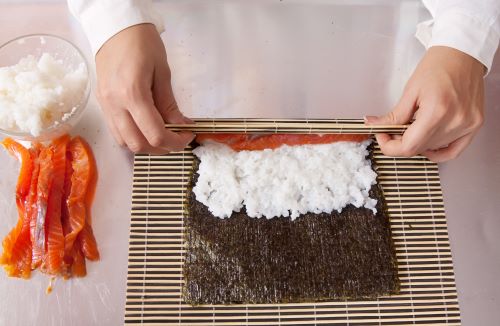
The preparation of the sushi mat and the correct procedure are key to successful rolls:
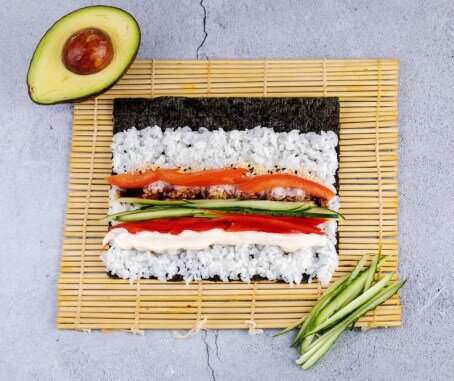
- Preparing the mat : Place it on a flat surface and place the nori on it, shiny side down.
- Working with rice : Wet your hands so that the rice does not stick. Spread the rice evenly on the nori, leaving 1-2 cm of space at one end.
- Adding the filling : Place the ingredients of your preference about one-third of the way from the bottom edge of the nori.
➡ Tip: Evenness is important not only for aesthetics, but also for the strength of the sushi roll.
Sushi rolling technique
The correct rolling technique is key for the sushi to keep its shape, be firm and aesthetically impressive. This process requires patience and precision, but with the right procedure, anyone can do it:
-
Preparing to roll

Place the nori on the sushi mat, shiny side down, aligning the bottom edge of the nori with the bottom edge of the mat. Spread a layer of rice evenly and add your chosen filling about 2cm from the bottom edge. -
Start of scrolling
Grasp the bottom edge of the mat along with the nori, using your thumbs to lift the mat and your fingers to stabilize the filling. Slowly begin wrapping the mat and nori, gently pressing the contents inward. -
Middle phase of scrolling
Continue rolling with gentle but firmly controlled pressure. With each roll, press the sushi mat down slightly to compact the contents and keep their shape. -
Closing the roll
When you reach the free end of the nori, moisten it slightly with water or rice vinegar to make it stick easily. Continue gently rolling until the roll is completely closed. -
Shape control
After you finish rolling, make sure the roll has an even cylindrical shape. If the roll is too loose, gently tighten it with a washer.
➡ Tips for perfect scrolling:
- If you have a problem with too sticky rice, dip your fingers in water regularly.
- If the contents of the roll protrude, make sure you have placed the ingredients correctly and evenly.
- For beginners, we recommend starting with a smaller amount of filling and gradually increasing the amount as you gain confidence.
Finishing touches and serving
After successfully rolling the sushi, it is crucial to focus on precise cutting and attractive presentation. This final step will highlight not only the flavors, but also the aesthetic side of your rolls.
-
Perfect sushi cutting
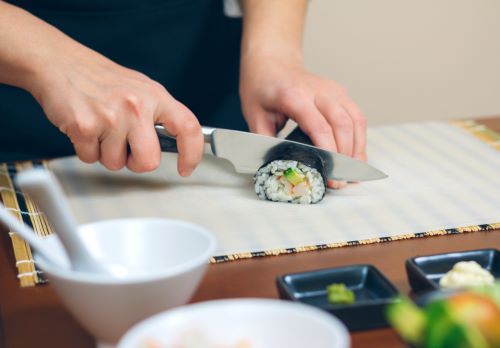
- Use a sharp knife that you moisten in water before each cut. This will prevent the rice from sticking to the blade and ensure a smooth and clean cut.
- Cut the rolls in half first, then divide each half into equal parts to achieve consistent pieces. Typically, the roll is cut into 6-8 pieces.
- ➡ Tip: If you have a problem with the roll falling apart, check that it was tightly rolled and that the knife is not dull.
-
Serving sushi

- Place pieces of sushi on white plates so that their color and texture stand out.
- For an extra effect, add salad leaves that can serve as a base for the rolls.
- Don't forget to serve the sushi with pickled ginger (gari) and a bowl of soy sauce for dipping. If you dare, add a gentle dollop of wasabi next to the rolls on the plate.
-
Create an authentic atmosphere
- For the ultimate experience, pair sushi with traditional drinks such as sake , Japanese beer or matcha green tea . These accessories emphasize the taste of sushi and leave an authentic impression.
- ➡ Tip: Try adding small decorations, such as thin strips of carrots, cucumbers or sesame seeds, which will decorate the sushi and highlight its aesthetic value.
Inspiration for different variations
Once you've mastered the basics, you can experiment with creative variations:
- Uramaki : Inverted sushi with rice on the outside.
- Nigiri : Rice rolls with a slice of fish or vegetable on top.
- Exotic combinations : Mango, salmon and wasabi mayonnaise for a modern twist.
➡ Interesting: The sushi mat is a traditional tool of Japanese cuisine and its use has a centuries-old history.
Become a sushi master in your own kitchen!
With a little practice and our simple steps, you can create sushi that will impress family and friends. Don't be afraid to experiment with different ingredients and techniques and bring the tradition of Japanese cuisine directly to your table.



Add new comment:
Add reply to comment: